From 5 Workers to 2: What Automation Is Changing in Sealant Cartridge Packing
As automation continues to develop in the sealant manufacturing industry, more producers are beginning to ask an important question:
If the filling process is already automated, should the packing process also be automated?
In most sealant production lines, different filling technologies are used depending on material viscosity.
Generally speaking:
- Low-viscosity sealants are filled using vertical filling machines
- High-viscosity or paste-type sealants are processed using horizontal filling systems
To increase production capacity, filling machines are usually designed with multiple filling heads. Vertical systems often provide more configuration flexibility, while horizontal filling machines commonly adopt single-head, double-head, or four-head structures.
However, as filling efficiency increases, many manufacturers quickly discover a new bottleneck: Manual packing's inefficiency and shortages
This is why more and more factories are integrating automatic carton packing systems into their filling lines.
What Can an Automatic Packing Line Do?
Since 2008, Great Machinery has focused on the development and manufacturing of packaging equipment for sealants and adhesives. Over the years, we have accumulated extensive experience in both filling systems and carton packing solutions.
As the industry grows, more equipment suppliers have entered this field. As one of the earlier manufacturers, we are often asked a simple question:
What makes your packing machines different?
One key answer is:Customization.
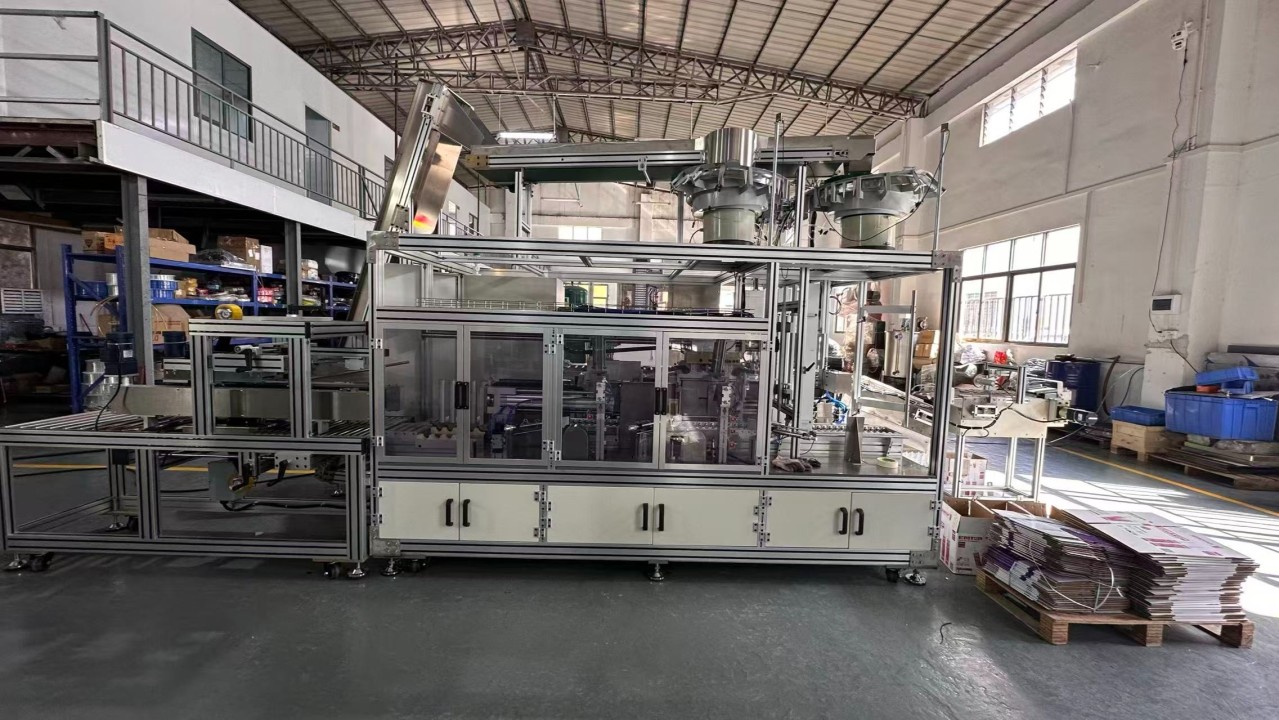
Last year, we designed a customized cartridge packing line for Guibao, specifically developed to match the customer's semi-automatic filling process.
Some people may wonder:Why semi-automatic filling but fully automatic packing?
The answer lies in the customer's production environment.
Their sealant materials must be filled manually from a heated tank, and the factory layout also limits the available space. After an on-site evaluation, our engineering team designed a highly integrated packing line that perfectly fits the existing workflow.
This system integrates multiple functions in one line:
➡️ Cartridge inkjet printing ;
➡️Cartridge sorting and feeding into the carton;
➡️Automatic nozzle feeding and placement ;
➡️Certificate insertion and Weight inspection and rejection ;
➡️Automatic carton erecting and Top and bottom carton sealing ;
➡️Carton strapping reinforcement(Alternativable),This integrated design improves automation while reducing the risk of carton deformation and product damage during transportation.
The Real Impact of Automation: Labor Efficiency
One of the most significant changes brought by automation is labor reduction.
In many sealant factories, a traditional manual packing process typically requires five workers to complete the workflow:
➡️One worker opening cartons ;
➡️Two workers sorting cartridges and placing them into cartons ;
➡️ One worker installing nozzles and place the labels into the carton;
➡️One worker sealing cartons and palletizing.
With an automatic carton packing machine, the entire process can usually be handled by only two operators:
➡️One operator starts the machine and loads materials (cartons and nozzles) ;
➡️One operator organizes finished cartons and stacks them onto pallets.
In other words:From 5 workers to 2.
This significantly reduces labor requirements while creating a more stable and standardized production process.
One Machine, Two Packing Specifications
Another common request from customers is flexible packing formats.
Standard packing machines are typically designed for one carton specification.
However, in some customized projects we design dual-station packing systems.
For example, a machine we recently built for Arix can handle two packing formats on the same machine:
• 24 cartridges per carton
• 12 cartridges per carton
This allows manufacturers to switch packaging formats easily without replacing equipment, providing much more flexibility for different market demands.
Customer Questions: How Does Automatic Nozzle Feeding Work?
In cartridge packing systems, customers are often curious about nozzle feeding and installation.
Here are three common questions we receive.
1. Do nozzles need to be manually sorted before loading?
No.
Operators simply pour the nozzles directly into the hopper without arranging them.
The system includes an automatic sorting mechanism.
Nozzles first enter the storage hopper, then move through a ladder-type feeding structure before reaching a vibratory bowl feeder, where they are automatically oriented and delivered to the nozzle installation station.
The entire process is fully automated.
2. Is there a recommended nozzle thickness?
Yes.
Based on our experience, we recommend that the clip thickness of the nozzle should not be less than 2 mm.
Thinner nozzles can easily deform during transportation or feeding, which may lead to unstable operation.
A 2 mm or thicker structure provides better rigidity and significantly improves system stability.
3.What is the success rate of inserting the nozzle onto the cartridge?
This is a very reasonable concern. If the nozzle installation fails, it can interrupt the entire packing process.
In our system, the nozzle placement success rate reaches 99–100%.
Here is how it works:
➡️Nozzles are first loaded into the hopper and enter the vibratory bowl feeder.
➡️ Inside the bowl feeder, a sensor detects the orientation of the nozzle clip (ear tab).
➡️ Only nozzles with the correct clip direction are allowed to continue along the feeding track.
➡️ Nozzles with the wrong orientation are automatically rejected and recirculated back into the bowl.
This ensures that the nozzle can be accurately inserted onto the cartridge every time, achieving a placement accuracy of 99–100% during operation.
For manufacturers running high-volume production lines, this level of reliability is essential to maintain continuous and stable operation.
Automation Is More Than Just Speed
When manufacturers consider automation equipment, the first question is usually about speed.
If automated systems are slower than manual work, factories are unlikely to invest.
Today, automatic cartridge packing machines typically operate at about: 2–3 cartons per minute.
However, the real advantage of automation is not just speed.It is process stability.
Sensors continuously monitor every step of the operation. If any step fails or deviates from the standard process, the system immediately triggers an alarm and stops the machine, reducing human errors.
The Future of Sealant Production Lines
For sealant manufacturers, automation is not only about increasing production capacity.
It also means:
➡️Lower labor costs and higher production stability ;
➡️More consistent product quality ;
➡️Better overall efficiency.
As the industry continues to evolve, automatic carton packing systems are becoming a key component of modern sealant production lines.
Great Machinery has been recognized internationally
Related Article
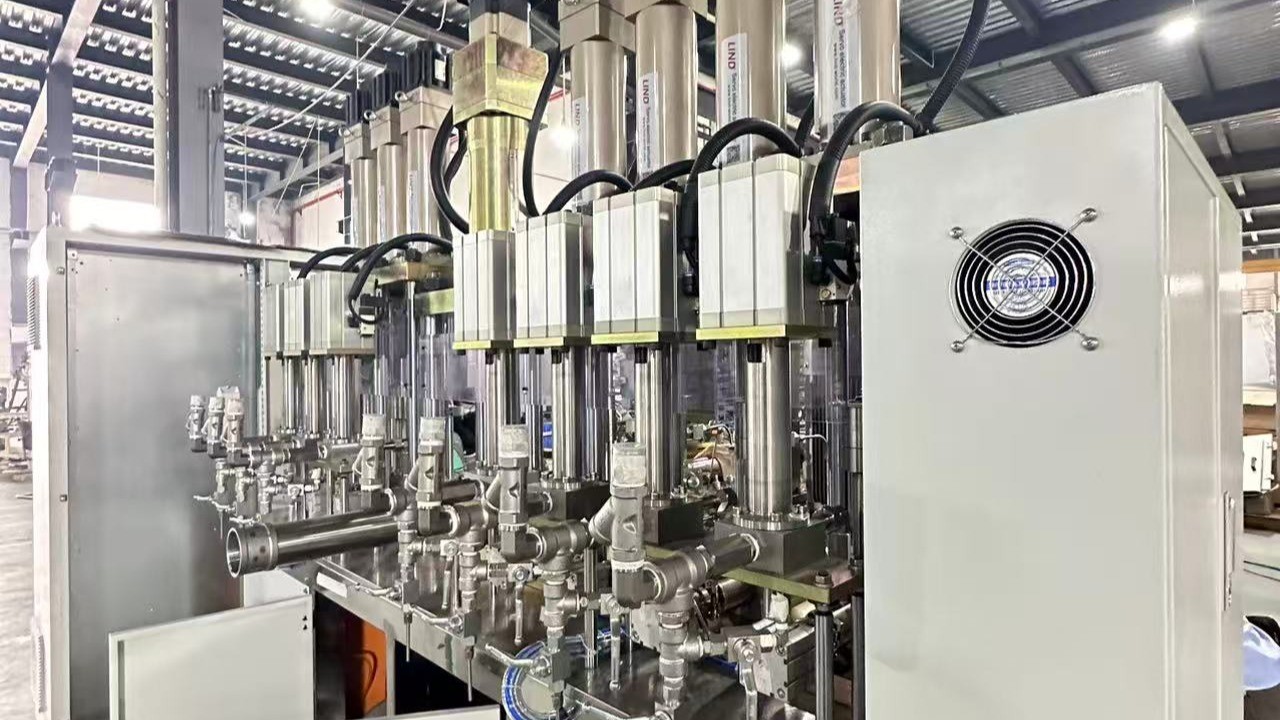
Whether for construction façades, consumer appliances, or automotive components, colored sealants play a vital role in delivering visual consistency and brand quality. To meet these rising demands, GREAT Machinery proudly delivered two sets of custom color mixing systems (Model GR-TSJ-X8-600) to Bluestar Silicones Xinghuo, a subsidiary of Sinochem Group and part of the global ELKEM family.