
How We Closed a High-Stakes Deal in Russia Under Sanctions: A Full Case Study
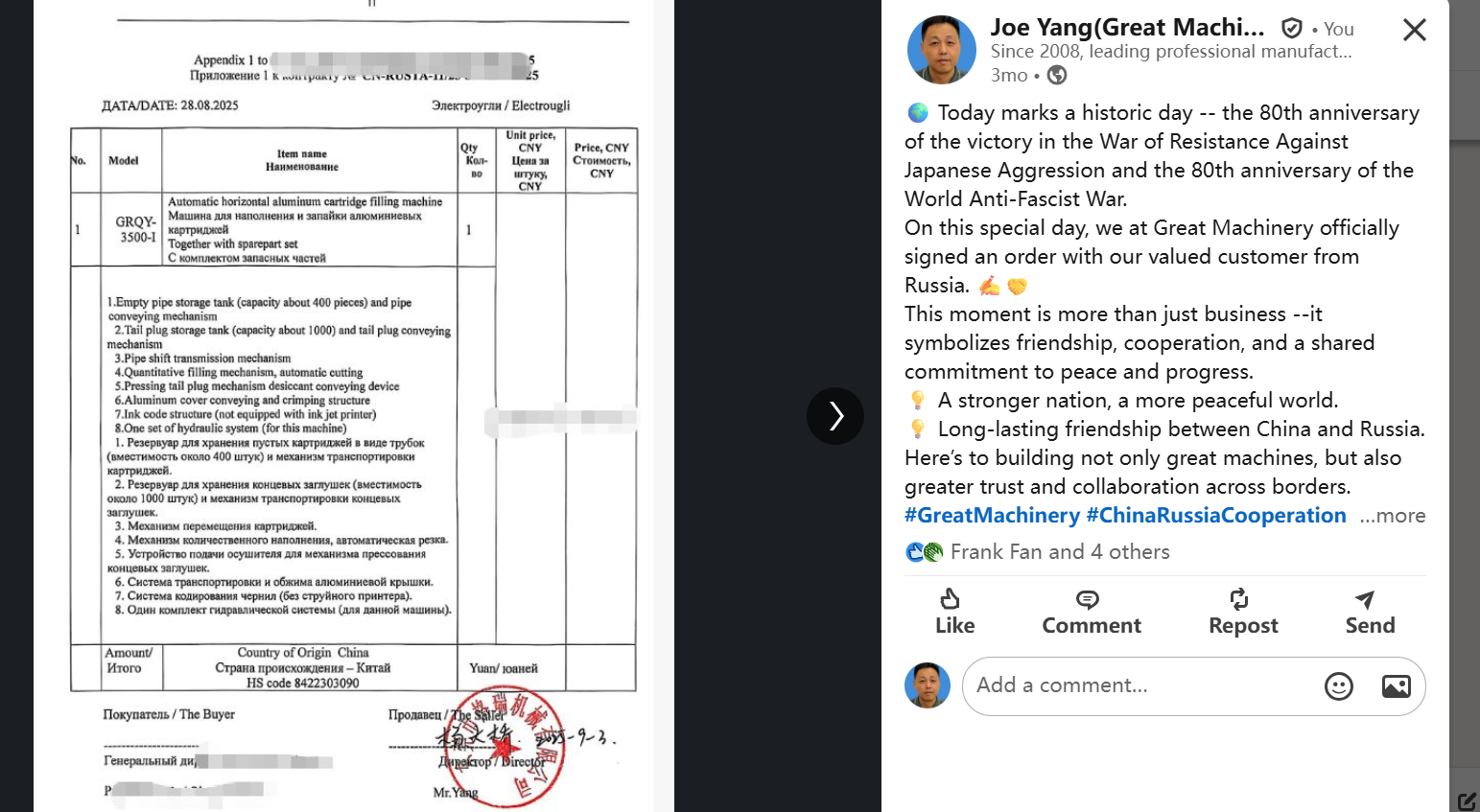
In today’s shifting global trade environment, China–Russia industrial cooperation is moving toward a more pragmatic, quality-driven direction. Sanctions have made cross-border payments more complex, but they also highlight which suppliers are truly capable, reliable, and ready to deliver.
In this article, I want to share a recent case in which we successfully closed an order for a fully automatic aluminum tube filling line with a Russian client—a practical example of how to navigate high-uncertainty markets in the machinery industry.
1. VTB Bank Account: The First Gate to Entering the Russian Market

For anyone doing business with Russia today, settlement is the first and unavoidable challenge. We started our VTB corporate account application in May and were approved in July. Here are the four key learnings:
1) Prepare all documents perfectly the first time—especially the legal representative and financial controller information.
2) Secure your potential client’s company details and tax number early, and before the video interview stage, ask the client and VTB branch to issue an “expedite letter.” This plays a decisive role in review priority.
3) Approval periods vary, but the trend is accelerating—some cases now finish within one week.
4) Risk review is the true test of professionalism—you must clearly demonstrate the trade background, product use, and compliance logic.
Solving the settlement issue is not the end; it’s merely the beginning of doing business in Russia.
2. Where Do Russian Clients Come From? Why YouTube Matters More Than LinkedIn
Most of our global inquiries come from social media—mainly LinkedIn, Facebook, and YouTube. LinkedIn is our strongest B2B channel: we have over 40+ active clients from LinkedIn alone, and have already closed deals in 7 countries through the platform.
But Russia is a special case:
Because LinkedIn access is restricted in the region, Russian buyers rely heavily on YouTube to evaluate suppliers, study equipment, and initiate inquiries.
From our experience: Russian B2B decision-makers rely on video more than any other market. This explains why we continue to receive steady inquiries from Russia through YouTube.
3. Conversion Cycle: High-Value Machinery Deals Are Never “Instant Decisions”


When this client first contacted us in February, they only asked about semi-automatic and static-mixing equipment. There was no clear purchasing intention.
What I did was maintain consistent professional presence: — I shared important project write-ups, including a detailed case study of our new 5K dual-station static mixer (sent as a PDF). This significantly raised their interest. — I regularly shared R&D updates and production activity via WhatsApp. — I provided recent domestic success cases, including two universal color-mixing machines we delivered to a state-owned enterprise.
None of this was “sales pushing.” It was long-term trust building.
Then one day in April, the client informed me: They were launching a new PU sealant packaging project and required a fully automatic aluminum tube line.
Real demand always appears when preparation is already in place.
4. The Trust Leap: An On-Site Visit in Russia

After multiple online discussions and increasing interest from the client, our CEO flew to Russia in May for an in-person visit.
In high-value international machinery purchases, trust is the real currency.
After this visit, the client immediately sent several new engineering inquiries. Although these projects have not yet entered execution, the client has clearly stated that their upcoming 13 production lines will prioritize us as the supplier.
Whether online or offline, our goal has always been consistent: Identify the real pain point and provide a workable solution.
5. The Turning Point: Not Pricing — but After-Sales Competence

The most crucial turning point came one day in July, when the client asked: “What does your after-sales system look like?”
This was the real moment of decision.
I organized a joint meeting with our quality engineer, CEO, and production planning team, and we built a full after-sales ecosystem:
— Spare parts guarantee — Consumables supply plan — Repair insurance — Dual-channel service: online + on-site support
The client was extremely satisfied.
In the Russian market, buyers fear “machines without responsibility” more than “machines with problems.”
We resolved the risk they worried about the most.
And throughout all the project delays, what truly secured the order was not persistence, but maintaining the right rhythm of communication.
6. FAT Inspection: When You Step Forward, the Client Steps Closer
During the FAT stage, the client hesitated between third-party inspection and online FAT.
We proactively offered: — On-site training for their engineers — Assistance in sourcing drying-agent raw materials — Material procurement support for testing
None of this was required by contract, yet all of it exceeded expectations.
Eventually, the client chose online FAT. They were fully satisfied with: — Machine performance — Technical explanations — Material sourcing support
And they clearly stated they would purchase more units and additional lines in the future.
That is how positive cycles begin.
7. Final Thoughts: In Times of Change, Trust Is the Core Competency

This project spanned six months, multiple delays, and the complexity of cross-border compliance. It crossed different cultures, systems, and expectations.
My biggest insight is this:
In the international machinery industry, price is not the decisive factor. Trust is.
And trust is not built through promises, but through: — Professional expertise — Consistent actions — A service system that lets clients sleep well
Uncertainty in global trade will continue to rise. But the companies that will thrive are those that can consistently solve problems, deliver results, and make clients feel secure.
And that is the path we will continue to walk.
【Tech Column】Redefining Precision Mixing|How Our Static Mixer Line Elevates Silicone Sealant Production
Custom Color Matching Sealant System Delivered to ELKEM's Subsidiary by GREAT Machinery
Related Article
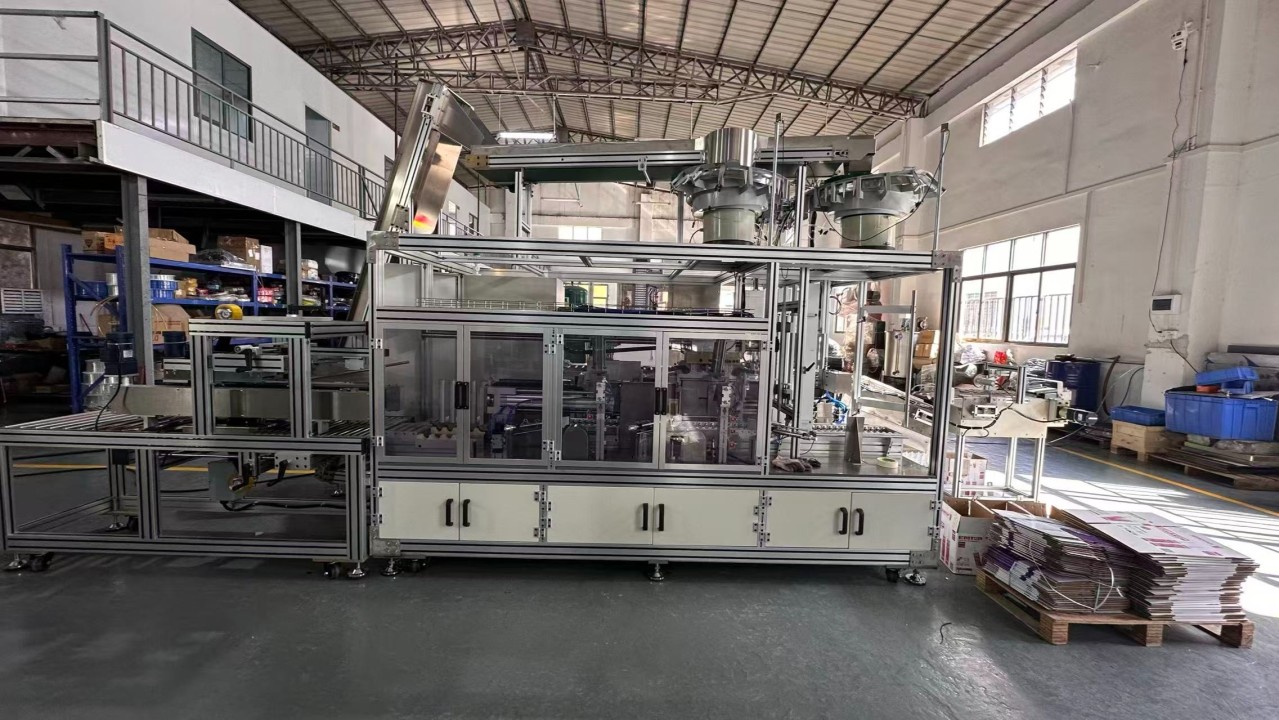
adopt manual opening cartons,sorting cartridges,install nozzles,seal cartons and palletizing. which often requires five workers.
But with an automated packing system, the same process can usually be handled by just two operators.
So what actually changes inside the production line?
In this article, we share:
➡️A real project case from a sealant factory;
➡️How semi-automatic filling can work with automatic packing;
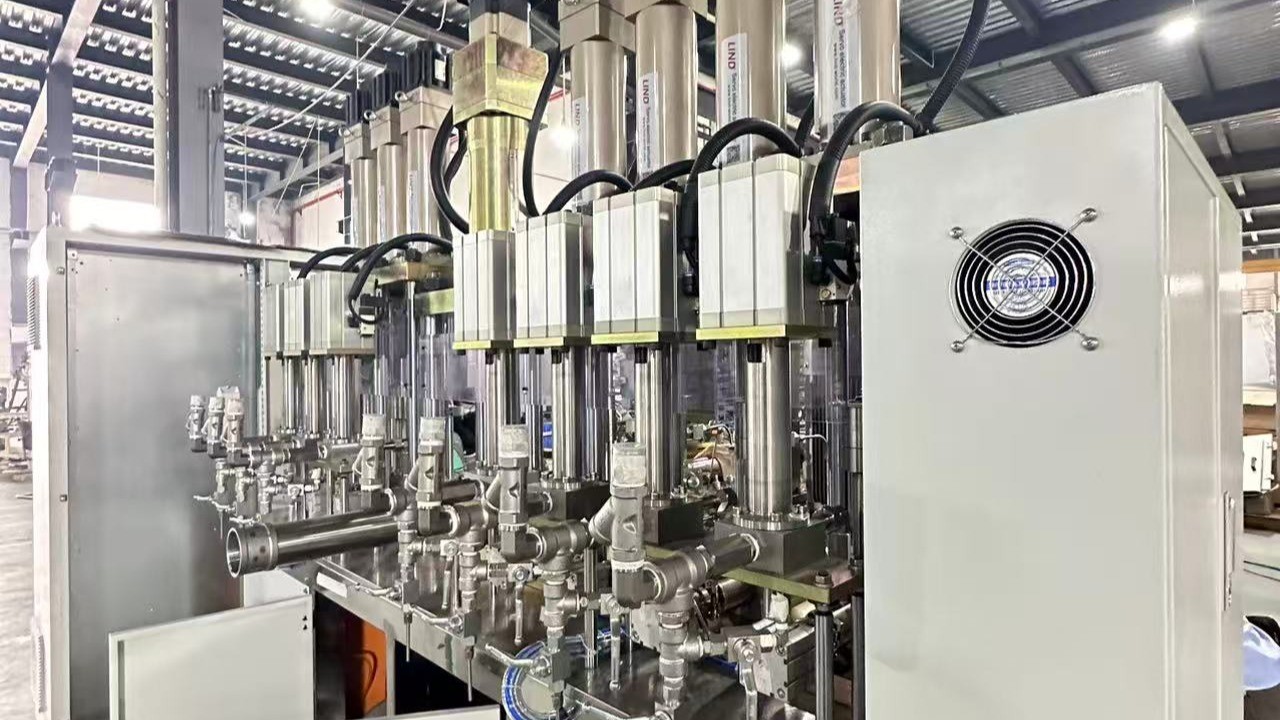
Whether for construction façades, consumer appliances, or automotive components, colored sealants play a vital role in delivering visual consistency and brand quality. To meet these rising demands, GREAT Machinery proudly delivered two sets of custom color mixing systems (Model GR-TSJ-X8-600) to Bluestar Silicones Xinghuo, a subsidiary of Sinochem Group and part of the global ELKEM family.
